
A new wooden fence may look perfect at first, but the mix of humidity, rainfall, and shifting clay soil quickly puts that to the test. Within a year or two, untreated boards can fade, warp, or lean if they’re not made from the right materials.
In Virginia’s climate, moisture is the biggest enemy. The region gets over 43 inches of rain annually, with muggy summers and freezing winters that expand and contract the soil. That constant cycle quickly wears down low-quality wood.
For local homeowners, the most reliable choices are cedar, pine, and pressure-treated lumber — each with its own strengths in durability, appearance, and maintenance. Before scheduling a new wood fence installation in your Richmond home, it helps to know which material holds up best to local weather and fits your long-term plans.
Climate and Fence Longevity
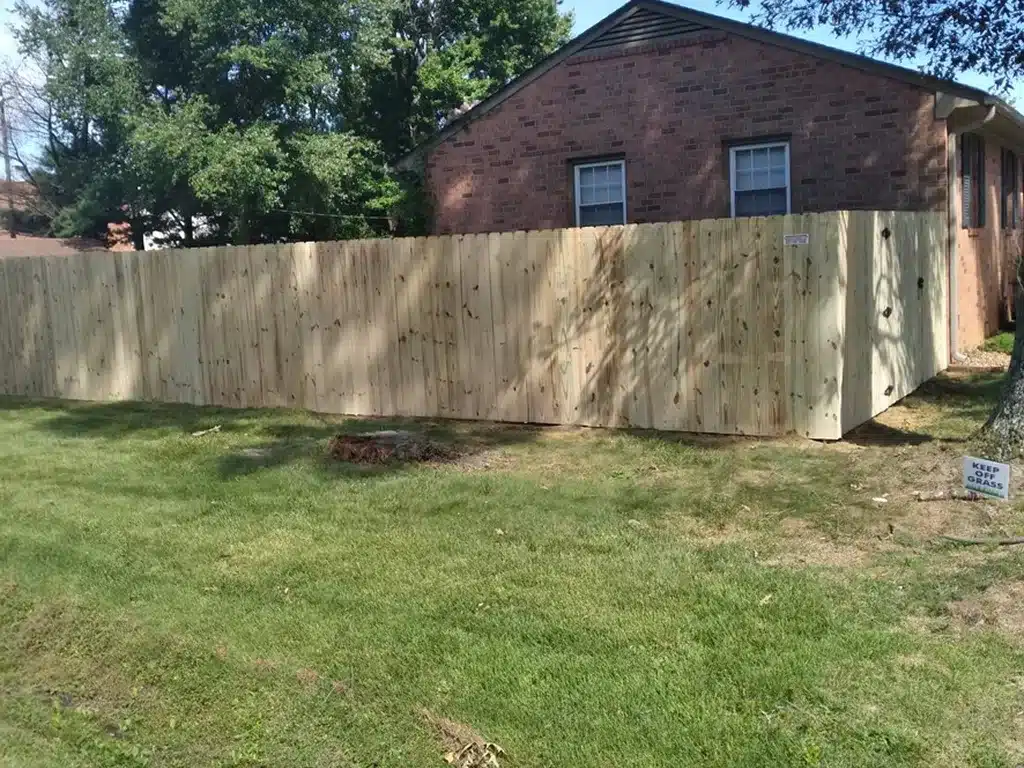
Humidity and fences have never been friends. In neighborhoods along Walmsley Blvd or tucked behind Dorset Rd, you’ll often see the same pattern: posts leaning from soft soil, green streaks climbing up from the base, boards fading before year three. It’s not neglect. It’s physics.
Clay soil traps moisture instead of letting it drain, so every rainstorm turns into a slow, underground soak. Add in full summer sun that bakes those damp boards dry by afternoon, and you get endless expansion and contraction—the perfect recipe for cracks. The UV exposure does its own damage, breaking down the lignin in wood fibers so color fades and the surfaces roughen.
Then there’s winter. When the mercury drops, trapped water inside the wood freezes and expands. That pressure opens seams, invites mold, and weakens fasteners. It’s why you’ll see one fence standing tall while its neighbor slouches by February. Same neighborhood. Different wood.
Wood Species Comparison — What Works Best in Richmond
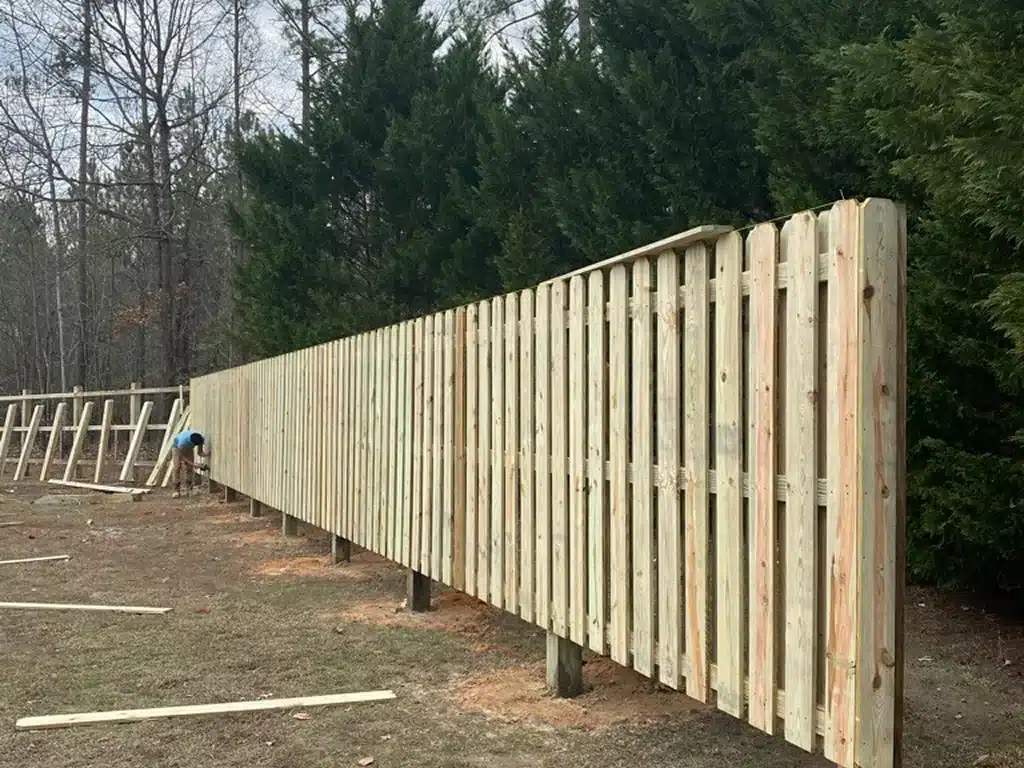
A. The Short Story Before the Science
Cedar smells like nature’s version of resilience—oily, aromatic, and naturally resistant to the rot and bugs that love Virginia’s humidity. Pine, on the other hand, is the budget-friendly workhorse: easy to find, easy to shape, but needy in this weather. Pressure-treated lumber? Think of it as pine that’s been to boot camp—infused with preservatives to survive the mud, rain, and insects that undo ordinary wood.
Many homeowners mix and match—pressure-treated posts with cedar pickets. It’s practical, good-looking, and cheaper than going full cedar.
B. Quick Comparison Table
| Feature | Eastern Red Cedar | Southern Yellow Pine | Pressure-Treated Pine |
| Initial Cost | $$$ | $ | $$ |
| Rot Resistance | Excellent | Poor (untreated) | Good |
| Insect Resistance | High | Low | High |
| Maintenance Level | Low | High | Moderate |
| Color Aging | Silvers gracefully | Warps or yellows | Stable, plain look |
| Lifespan | 20–25 yrs | 10–15 yrs | 15–20 yrs |
| Ideal Use Case | Premium privacy or decorative fences | Large or budget projects | Posts, frames, mixed builds |
C. What the Table Doesn’t Show
Numbers tell part of the story, but wood has personality. Cedar’s secret weapon is its natural oil content, which deters decay and keeps insects at bay. You can run your hand across it in July and still feel it dry and firm. It fades to that silvery gray you see in classic neighborhoods—aged, not neglected. It also smells faintly sweet when the sun hits it, which is a nice bonus.
Pine, specifically Southern Yellow Pine, grows fast and keeps costs down. It’s sturdy when new but vulnerable if left unsealed. You’ll notice the difference after a few storms: minor cupping, a twist here, a hairline crack there. It’s fixable but only with vigilance and regular resealing. The payoff is affordability, especially if you’re fencing several hundred feet of property line.
Then there’s pressure-treated pine, the quiet middle ground. It’s standard pine that’s been infused—literally pressurized—with preservatives that resist rot, mold, and termites. Posts made this way can handle the area’s soggy soil far better than untreated lumber. Look for MCA or CA-C labels; they’re newer, more environmentally friendly treatments approved for residential use.
For those who like to dig deeper, the USDA Forest Service wood-durability guide breaks down how species hold up under moisture and insect pressure. It’s a solid reference for anyone comparing grades before heading to the lumber yard.
Installation & Maintenance Tips
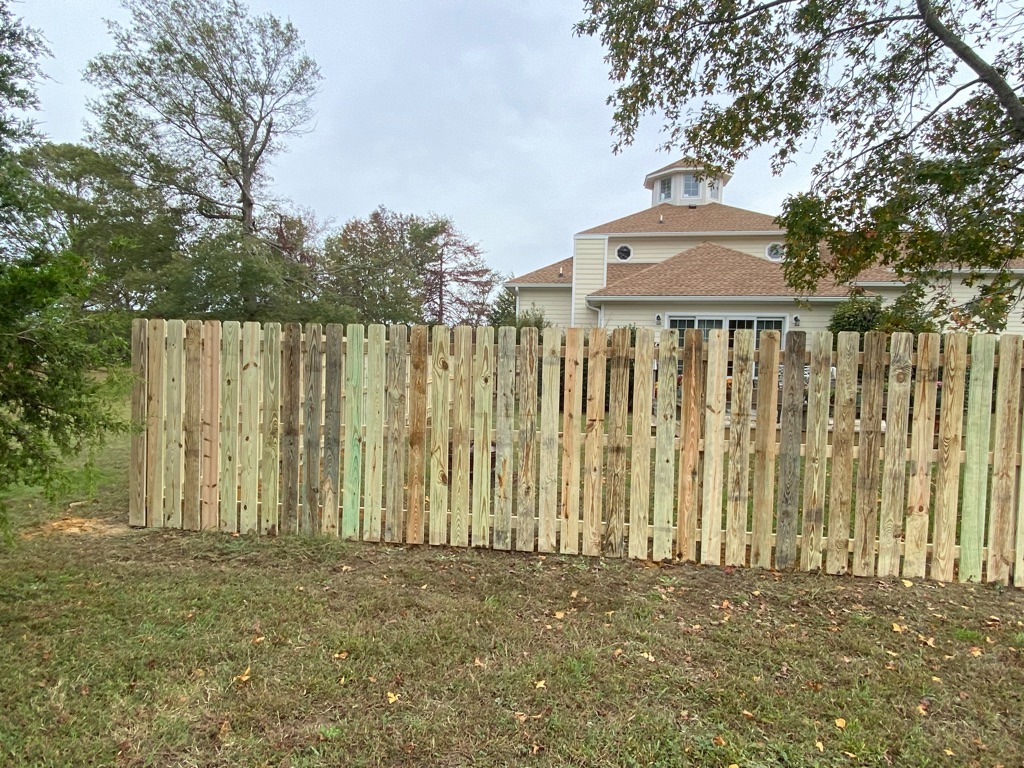
Even the best wood can fail if installed incorrectly. Posts should always be pressure-treated and set on gravel or concrete footings to let water drain away from the base. Avoid burying the bottom of the pickets directly in soil—that’s a slow invitation to rot.
Once built, let the fence dry for a few weeks before sealing. Apply an oil-based sealer designed for high-humidity regions; it penetrates deeper and keeps moisture from sneaking in through end grains. The same goes for staining—timing matters. For more detailed guidance, check out our article on wood fence staining in Richmond, VA: timing and best products.
Each spring, walk your fence line. Look for soft spots near sprinkler paths, replace cracked boards, and re-seal where needed. It’s a small weekend project that adds years of life to your fence. Think of it as routine home care, like cleaning gutters or re-caulking windows before hurricane season.
The Long-Term Value Equation
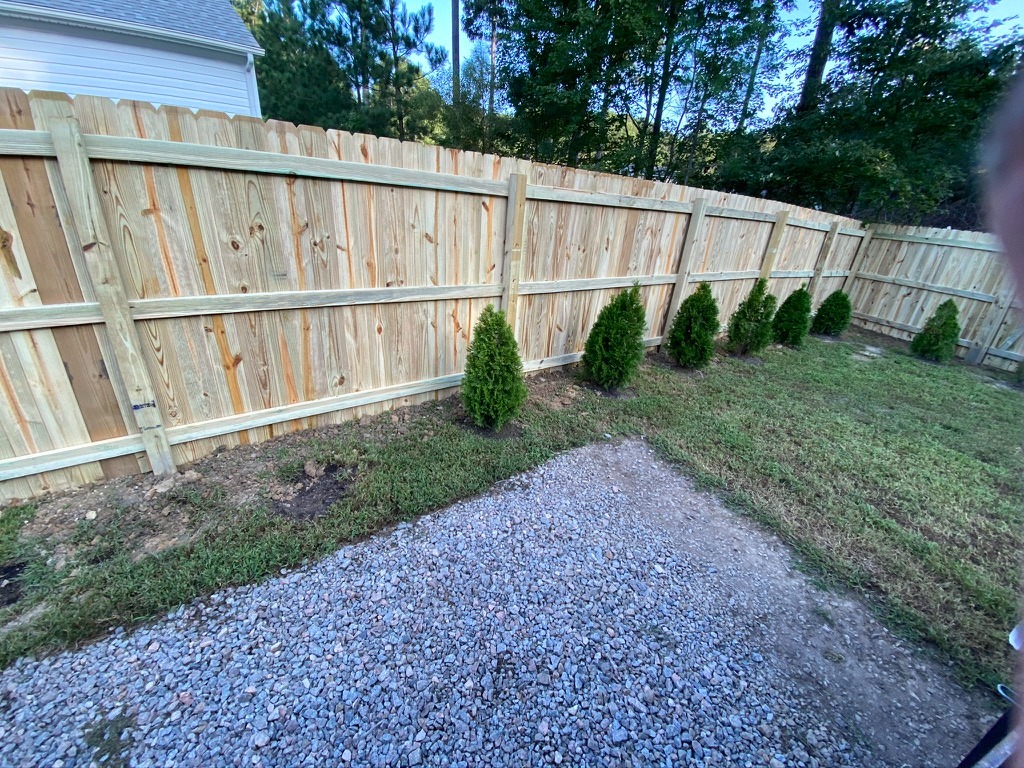
Let’s talk numbers. Cedar costs more up front—sometimes double the price of pine—but it usually lasts a decade longer and needs fewer touch-ups. Over twenty years, that price gap shrinks fast. Pressure-treated pine sits comfortably in the middle: slightly cheaper, a bit plainer, but sturdy and reliable when installed right.
The hidden factor? Labor. A poorly set post or skipped sealant round shortens any wood’s life by 30–40%. A well-built cedar or treated-post fence by a trusted fencing contractor can outlast its expected lifespan easily, saving you a full replacement cycle. In real terms, that’s thousands of dollars in avoided labor and disposal costs.
If you plan to stay in your home for more than five years, investing in quality materials pays off. A fence that still looks sharp a decade later doesn’t just protect your privacy—it adds resale appeal. Buyers notice when a property feels well-maintained.
Build It Once. Build It Right.
The best fence isn’t always the cheapest one. It’s the one that holds its shape through every wet spring and sticky August without constant repairs. Richmond’s climate is relentless, but with the right mix of materials and smart maintenance, you can win that battle for good.
If you’re planning a new build or replacing an older fence, it helps to see real samples and compare them side by side. Call us at 804-402-9980 or reach out to schedule a consultation. The right wood, installed the right way, means you won’t have to think about your fence again—except when neighbors ask who built it.
Frequently Asked Questions
What kind of maintenance do pine fences need in Chesterfield County?
Pine fences should be inspected yearly for warping or discoloration, especially after heavy rain. Reseal every two to three years and keep sprinklers angled away from the boards to prevent early rot. Regular upkeep keeps costs down in the long run.
Are pressure-treated posts safe for backyards near Walmsley Blvd?
Yes. Modern MCA or CA-C treated posts are safe for families and pets. They’re free of older arsenic-based preservatives yet strong enough to resist the heavy rainfall and damp soil common along Walmsley Blvd.
Does Richmond’s heat and UV exposure affect fence color?
Definitely. Intense summer sunlight breaks down surface fibers, fading color and drying the wood. Cedar turns a handsome silver; pine tends to yellow or crack. A UV-blocking sealant or stain helps slow the fade and keeps boards from becoming brittle.
What wood type holds up best against rainfall near Meadowbrook Country Club?
Homes near Meadowbrook Country Club face frequent rain and water-logged soil. Pressure-treated lumber is ideal for posts, while cedar pickets resist rot and insects. The combination—treated posts and cedar panels—lasts longest through 43 inches of yearly rain and shifting humidity.